
Crawl Space Encapsulation: A Permanently Sealed, Dry, Healthy Crawl Space
Maybe you've already dealt with a wet crawl space and thought you fixed it —
But the musty smell keeps coming back every summer. Maybe your energy bills climb every winter and summer and you can't figure out why, even with a newer HVAC system. Maybe you've just crawled under your house for the first time and found bare dirt, sagging old insulation hanging in strips, and air that feels thick enough to wring out.
A vented, unsealed crawl space isn't just a moisture problem — it's a direct connection between your living space and whatever is happening outside, all year round. In summer, humid outside air pours in through the vents and condenses on every cool surface. In winter, cold air pours in the same way, chilling your floors and forcing your HVAC system to work harder. Encapsulation shuts that connection down for good.
North Georgia Crawlspace Company is an authorized Certified Crawl Space Encapsulation® dealer serving North Georgia, Upstate South Carolina, and Western North Carolina. We don't just lay plastic on the dirt and call it done — we design a complete sealed system for your specific crawl space and stand behind it.
Get in touch today
What Encapsulation Actually Means
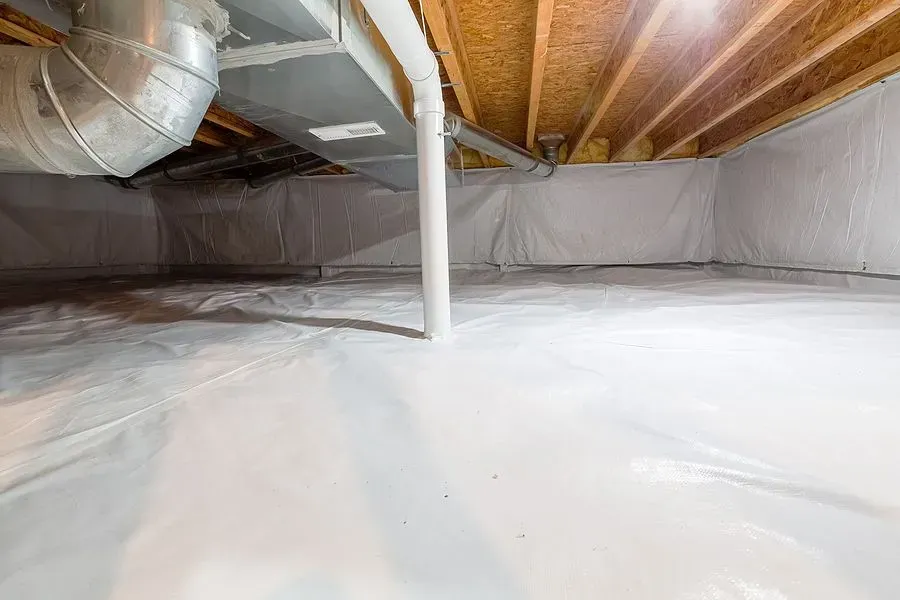
Encapsulation goes further than basic waterproofing or a simple vapor barrier. It means fully sealing the crawl space as its own controlled environment: a heavy-duty liner covers the entire floor and runs up the foundation walls and piers, vents are permanently sealed or replaced with a conditioned air source, and seams are taped and mechanically fastened so there are no gaps for moisture, soil gas, or outside air to get through. Most systems are then paired with a dedicated dehumidifier to actively manage humidity year-round, rather than just blocking ground moisture and hoping the rest takes care of itself.
The result is a crawl space that behaves more like a sealed basement than a vented dirt hole under your house — dry, stable, and no longer working against your home's structure or your energy bills.
Why Vented Crawl Spaces Struggle in Our Climate
Building codes historically required crawl space vents to let moisture "escape." In practice, in a humid climate like North Georgia's, those vents do the opposite — they pull in warm, moisture-laden outside air all summer, which condenses the moment it hits the cooler soil, ductwork, and floor joists under your house. Combine that with our region's dense clay soil, which holds groundwater close to the surface, and a vented crawl space ends up damp for most of the year, even when it hasn't rained. Encapsulation removes both moisture sources at once: it cuts off ground moisture with the sealed liner and cuts off humid outside air by sealing the vents.
Signs Your Crawl Space Needs to Be Encapsulated
A persistent musty smell that comes back no matter the season
Visible condensation on ductwork, pipes, or the underside of the subfloor
Higher-than-expected energy bills, or floors that feel cold in winter and clammy in summer
An old, torn, or partial vapor barrier that no longer covers the full crawl space
Mold, mildew, or wood rot that keeps returning after cleaning
Increased allergy or respiratory symptoms that improve when you're away from home
Every project starts with a free inspection where we assess your crawl space's current condition, moisture sources, and structural state. From there, our process typically includes:
Our Encapsulation Process
Clean-out and prep — removing debris, old insulation, and any wood or organic material that could feed mold or pests
Installing heavy-duty encapsulation liner across the entire floor, sealed up walls and around every pier
Permanently sealing or replacing vents so outside air can no longer enter
Installing a dedicated crawl space dehumidifier sized to your square footage
Integrating drainage — French drains and a sump pump — when groundwater intrusion is part of the problem
Every system is documented and explained before we start, so you know exactly what's being installed and why — not just that plastic is going down.
Encapsulation vs. Waterproofing: Which Do You Need?
These terms get used interchangeably, but they solve different parts of the same problem. Waterproofing (French drains, sump pumps, grading) stops liquid water from entering and pooling. Encapsulation seals the entire crawl space environment, including the air exchange through vents, and typically adds active humidity control. Many homes need both — waterproofing to handle bulk water, encapsulation to handle humidity and air quality — and we'll tell you honestly which combination your home actually needs rather than upselling a package you don't require.
Why Homeowners Choose North Georgia Crawlspace Company
Authorized Certified Crawl Space Encapsulation® dealer, meeting manufacturer standards for materials and installation
Locally owned and operated, with 8+ years serving North Georgia, Upstate SC, and Western NC
Every estimate is free, with a written, itemized scope of work
We design systems around your crawl space's actual condition, not a one-size-fits-all package
Frequently Asked Questions
How much does crawl space encapsulation cost?
Cost depends on square footage, current crawl space condition, and which components (dehumidifier, drainage, vent sealing) your home needs. We provide a detailed itemized quote after a free on-site inspection.
Will encapsulation lower my energy bills?
Most homeowners see a noticeable improvement, since a sealed, insulated crawl space stops conditioned air loss through the floor and reduces the load on your HVAC system caused by humid or cold crawl space air. The exact savings depend on your home's current insulation and HVAC efficiency.
Do I still need vents if my crawl space is encapsulated?
No — a properly encapsulated crawl space is sealed rather than vented. Local code may require documentation or a mechanical ventilation/dehumidification system in place of passive vents, which we handle as part of the installation.
How long does encapsulation take?
Most residential encapsulation projects take two to four days, depending on square footage, the amount of clean-out required, and whether drainage work is part of the scope.