
Foundation Block & Concrete: Repairing and Rebuilding What's Failing Below
Concrete block and poured concrete foundations are built to last decades, but they aren't indestructible. Years of soil pressure, water exposure, and freeze-thaw cycles (even in our relatively mild climate) can crack, crumble, or bow foundation walls and footings. When the block or concrete itself has failed — not just the wood framing above it — patching the surface isn't enough; the structural material itself needs repair or replacement.
Get in touch today
Common Foundation Block & Concrete Problems
- Cracked or crumbling concrete block, especially near grade level
- Bowing or leaning foundation walls from soil pressure
- Spalling concrete (surface flaking and crumbling) from water intrusion
- Cracked or settled concrete footings no longer providing even support
- Deteriorated mortar joints between block courses
Our Repair and Rebuild Process
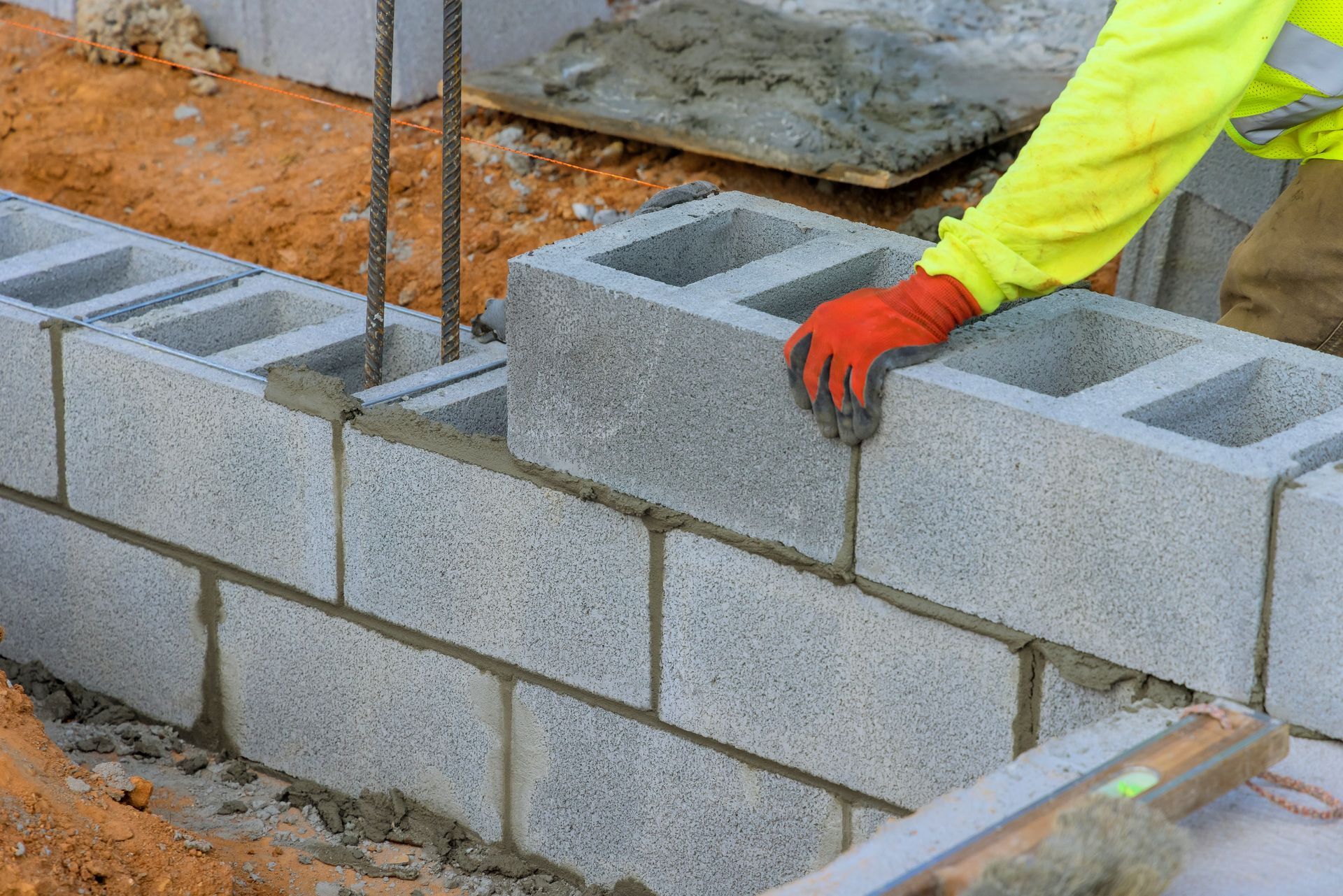
The right approach depends on how much of the original structure is still sound. For localized damage, we can remove and rebuild affected block sections, repair spalled concrete surfaces, and repoint deteriorated mortar joints. For more significant structural failure — a badly bowed wall or a footing that's lost load-bearing capacity — we install new concrete block, poured footings, or reinforcement designed to meet current structural requirements, not just replicate what failed. Where bowing walls are involved, we assess whether wall anchors or additional reinforcement are needed to stop further inward movement before it becomes a safety concern.
Why Water Management Matters Here Too
Water is the leading cause of block and concrete deterioration in our region — it drives the freeze-thaw and pressure cycles that crack block, and it dissolves and washes away binding materials in aging mortar and concrete over time. As with our other foundation repairs, we evaluate drainage and grading around any block or concrete repair, since rebuilding a wall without correcting the water source that damaged it usually just delays the same failure.
Frequently Asked Questions
Can a bowing foundation wall be fixed without replacing it?
In many cases, yes — wall anchors, bracing, or carbon fiber reinforcement can stabilize a bowing wall without full replacement, provided the damage hasn't progressed too far. We assess severity during your inspection.
How do I know if it's a cosmetic crack or a structural problem?
Hairline cracks in mortar joints are often cosmetic, while wide, horizontal, or step-pattern cracks in block, or any bowing, typically indicate a structural issue worth professional evaluation.
How long does foundation block or concrete repair take?
Localized repairs often take one to two days; larger rebuilds or wall stabilization projects can take longer depending on scope, which we outline in your written quote after inspection.