
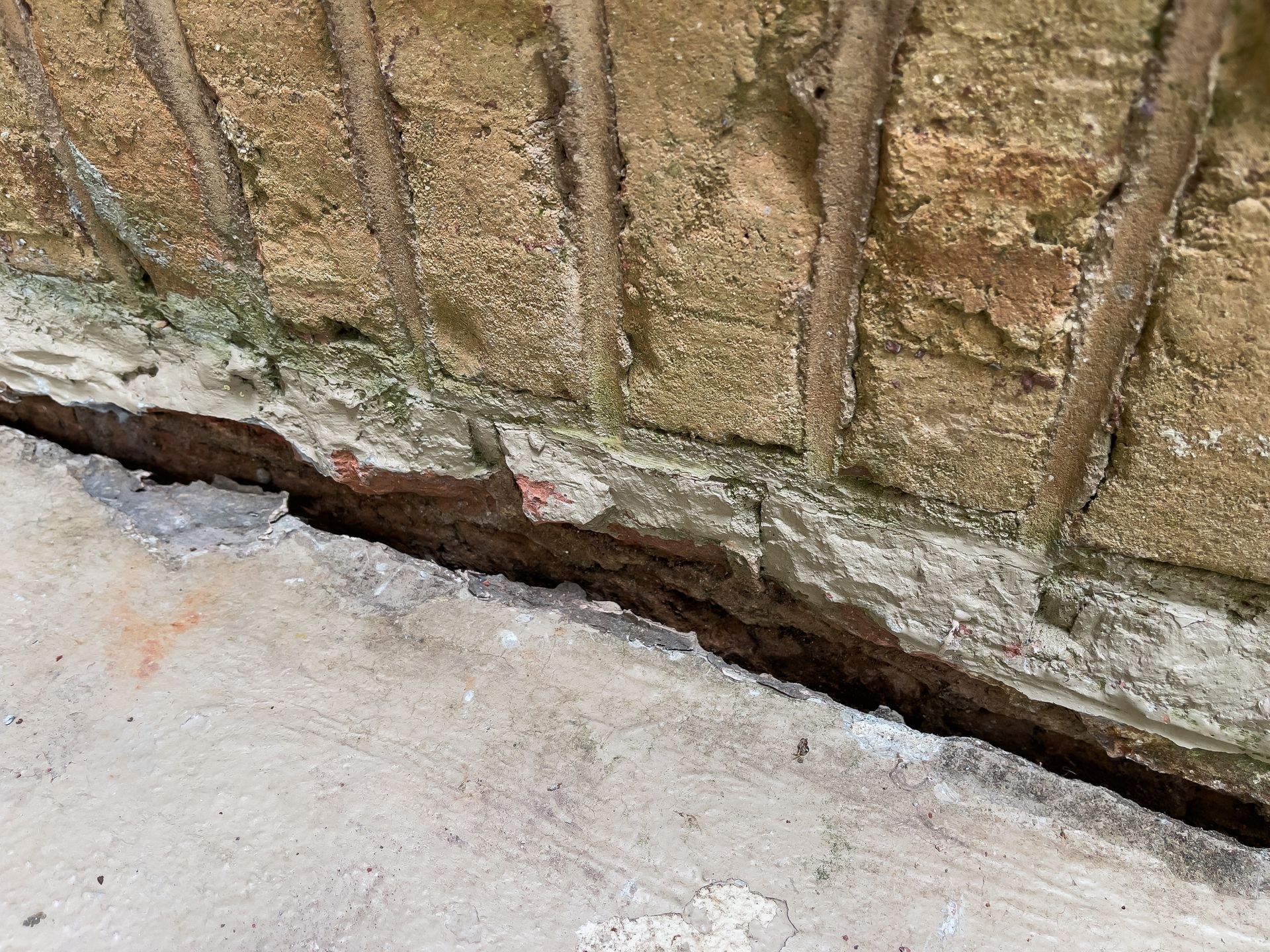
Jack and Pier Installation: Permanent Support for a Sinking Foundation
When a section of your foundation is actively sinking — not just cracked, but visibly lower than the rest of the house — the fix isn't patching the crack. It's getting new, engineered support down to soil or rock that can actually bear the load, which is exactly what a jack and pier system is designed to do.
Get in touch today
Helical Piers vs. Push Piers
We install both helical and push (hydraulic) piers, and which one is right for your home depends on soil conditions, the weight being supported, and how deep stable bearing soil sits below your foundation.
- Helical piers are screwed into the ground like a large earth anchor until they reach stable soil. They can support both compression and lifting loads, don't require reaching bedrock to perform well, and work in a wider range of soil conditions — making them well suited to additions, lighter structures, and situations needing immediate load support.
- Push piers are hydraulically driven into the ground, typically down to a dense soil layer or bedrock, and are well suited to heavier structures where deep, high-capacity support is needed. They handle compression loads and are often the more cost-effective option once excavation and depth requirements are accounted for.
We evaluate your home's soil conditions and structural load during your free inspection and recommend the pier system engineered for your specific situation — not a default choice.
How Pier Installation Works
We excavate access points at the locations needing support, install piers to load-bearing depth, and attach steel brackets to your foundation footing. Hydraulic equipment then lifts the settled section of foundation back toward its original position as much as safely possible, and the piers are locked in place to permanently carry the structural load going forward. Because the piers bear on stable soil or rock
Signs You May Need Piering
A visibly sinking corner or section of the foundation
Stair-step cracks in brick or block foundation walls
Doors and windows that have become significantly out of square
A foundation that has previously been repaired but continues to move
New construction or additions on fill soil or unstable ground
Frequently Asked Questions
Will piering fully level my foundation?
In many cases significant lift can be achieved, though full return to original position isn't always possible or advisable without risking damage to the structure above. We set realistic expectations for your specific home during the inspection.
How many piers does my home need?
It depends on the extent of settlement, your foundation's load, and soil conditions — we calculate this as part of your inspection rather than applying a standard number to every job.
Is pier installation disruptive to my landscaping?
Excavation is required at each pier location, but access points are typically limited in size and we restore the surrounding area once installation is complete.