
Keep Your Crawlspace Safe and Dry
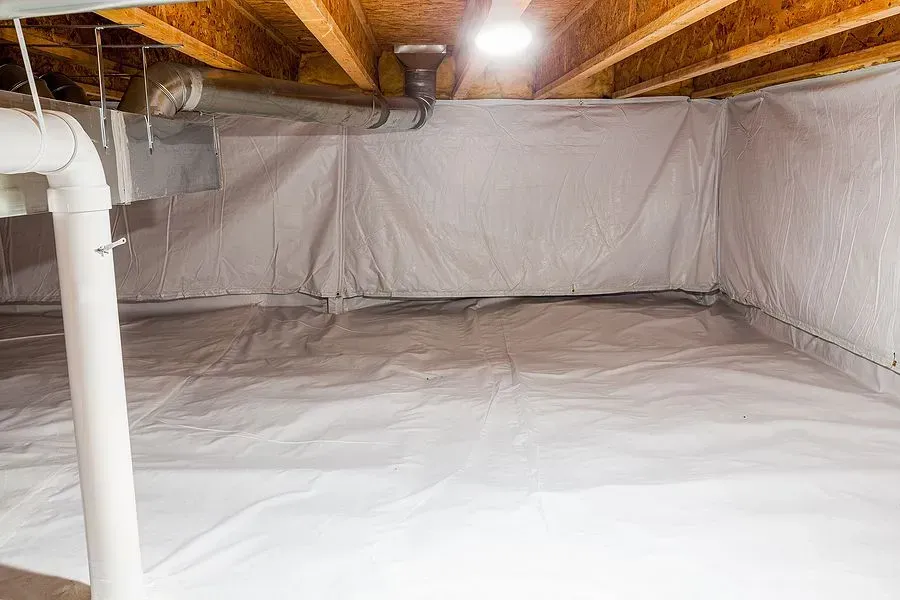
Basement Waterproofing: Keeping Your Lowest Level Dry, Not Just Drier
Water in a basement rarely stays a small problem for long. Maybe it starts as a damp patch along the base of a wall after heavy rain. Maybe it's a full inch of standing water on the floor every time a storm rolls through. Maybe you've noticed a musty smell that's crept into the rest of the house, or watched a finished basement's drywall and flooring get ruined more than once. Whatever stage you're at, a wet basement is telling you there's a specific, findable path water is taking to get in — and it's one that can be closed off for good.
Basements present a different waterproofing challenge than crawl spaces: they're fully below grade on some or all sides, which means they're under constant hydrostatic pressure from surrounding soil and groundwater, not just occasional surface water. That pressure pushes water through even small cracks and porous areas in foundation walls and floors, which is why basement waterproofing has to be engineered to handle sustained pressure, not just redirect the occasional puddle.
North Georgia Crawlspace Company waterproofs basements across North Georgia, Upstate South Carolina, and Western North Carolina, diagnosing exactly how water is entering before recommending a fix.
Get in touch today
Why Basements in Our Region Flood
Our region's dense red clay soil holds groundwater close to the surface and drains slowly, which increases hydrostatic pressure against basement walls, especially after heavy or sustained rainfall. Many homes throughout North Georgia's hilly terrain have basements built into a slope, with soil banked against one or more walls, concentrating water pressure on that side of the foundation. Poor original grading, aging foundation waterproofing (or none at all on older homes), and cracks that develop as the foundation settles over time all add additional paths for water to find its way in.
Signs You Need Basement Waterproofing
- Standing water on the basement floor after rain
- Damp or wet patches along the base of foundation walls
- Visible cracks in foundation walls, especially horizontal or stair-step cracks
- A musty smell that persists regardless of season
- Efflorescence (white, chalky mineral deposits) on basement walls
- Bowing or visibly inward-leaning foundation walls
- Mold or mildew on stored items, framing, or finished surfaces
Our Basement Waterproofing Services
Basement water problems typically call for one or a combination of these systems:
Interior drain systems that intercept water along the base of foundation walls and route it to a sump pump
Foundation wall waterproofing to seal cracks and treat walls where water is actively penetrating
Sump pump systems sized to handle your basement's water volume, with battery backup available
Exterior grading and drainage corrections that reduce the water reaching your foundation in the first place
Our Process
Every project starts with a free inspection where we identify exactly how and where water is entering — through wall cracks, at the wall-floor joint, through porous block, or from grading and drainage issues outside. Basement waterproofing is rarely a single-product fix; we design a system addressing your basement's specific entry points and water volume, and provide a written, itemized quote before any work begins.
Finished Basements Need Extra Care
If your basement is finished or partially finished, waterproofing has to account for existing drywall, flooring, and framing — sometimes requiring removal of a small section of wall or flooring along the perimeter to install an interior drain system, and careful planning to minimize disruption to the rest of the space. We'll walk you through exactly what that involves for your specific basement during your inspection.
Why Homeowners Choose North Georgia Crawlspace Company
- Locally owned and operated, with 8+ years of experience with North Georgia's clay soil and hillside foundations
- We diagnose the specific water entry point rather than defaulting to one product
- Free inspections and written, itemized quotes
- Experience working around finished basements with minimal disruption
Frequently Asked Questions
How much does basement waterproofing cost?
Cost depends on your basement's size, how water is entering, and which combination of drainage, wall treatment, and pump systems your home needs. We provide a detailed, itemized quote after a free inspection.
Can basement waterproofing be done from the inside, or does it require excavation?
Interior systems (drains, wall sealing, sump pumps) can address most basement water problems without exterior excavation, which is typically less disruptive and less expensive. Exterior excavation and waterproofing is sometimes needed for specific structural or wall-condition issues, which we'd identify during inspection.
Will waterproofing stop a bowing basement wall from getting worse?
Waterproofing addresses water intrusion, but a bowing wall may also need structural reinforcement (wall anchors or bracing) to stop ongoing inward movement — we assess both during inspection and can address structural concerns alongside waterproofing.
How long does basement waterproofing take?
Most basement waterproofing projects take one to four days, depending on square footage and whether interior drainage, wall treatment, or both are part of the scope.