
Vapor Barriers: Sealing the Ground Moisture That's Working Its Way Into Your Home
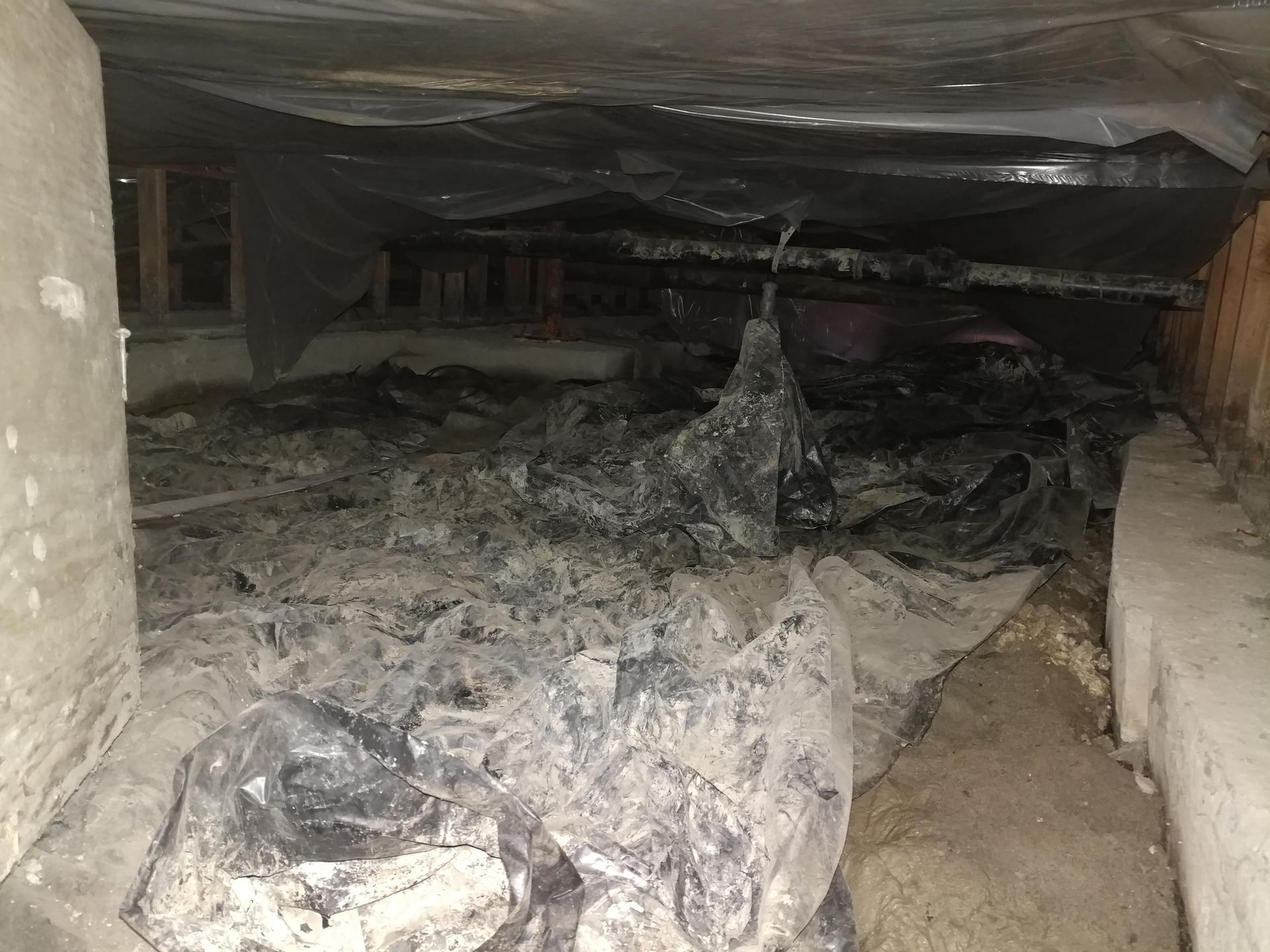
If your crawl space still has bare, exposed dirt —
Or a thin sheet of torn, faded plastic from years ago — moisture is rising out of that soil every single day, whether it's raining or not. That moisture doesn't stay in the crawl space. It works its way up into your subfloor, your insulation, and eventually your living space, showing up as musty odors, higher humidity in the rooms above, warped hardwood floors, or a steady supply of moisture that mold and wood-destroying insects need to thrive.
A proper vapor barrier is one of the most cost-effective things you can do to protect a home built over a crawl space, and it's often the missing piece even in homes that have had other waterproofing work done.
Soil naturally releases water vapor through a process called capillary action, even when it looks and feels dry on the surface. In an unsealed crawl space, that vapor rises directly into the air under your home, where it condenses on cool surfaces like ductwork, joists, and the underside of your subfloor. A vapor barrier is a heavy-duty polyethylene liner installed across the entire crawl space floor and sealed up the foundation walls and around piers, cutting off that moisture at the source before it ever has a chance to reach the wood structure of your home.
What a Vapor Barrier Actually Does
Not all “plastic on the ground” is the same. Thin painter's plastic or a 6-mil liner from a hardware store tears easily, doesn't seal properly at seams or piers, and typically needs replacing within a few years — often after it's already let moisture back in. We install commercial-grade vapor barrier material (typically 12-20 mil, depending on your crawl space conditions), seam-taped and mechanically sealed to foundation walls and support piers, so there are no gaps for moisture, soil gas, or pests to sneak through.
Why the Thickness and Installation Quality Matter
Vapor Barrier Alone vs. Full Encapsulation
A vapor barrier addresses ground moisture specifically. If your crawl space is also vented and pulling in humid outside air, or if you're dealing with ongoing mold, wood rot, or comfort issues in the rooms above, full encapsulation — which seals the entire crawl space, including vents, and typically adds a dehumidifier — may be the more complete fix. We'll walk you through both options honestly during your free inspection so you're not paying for more than your home actually needs, or leaving a gap that lets the problem come back.
Get in touch today
A vapor barrier addresses ground moisture specifically. If your crawl space is also vented and pulling in humid outside air, or if you're dealing with ongoing mold, wood rot, or comfort issues in the rooms above, full encapsulation — which seals the entire crawl space, including vents, and typically adds a dehumidifier — may be the more complete fix. We'll walk you through both options honestly during your free inspection so you're not paying for more than your home actually needs, or leaving a gap that lets the problem come back.
Vapor Barrier Alone vs. Full Encapsulation
Signs Your Crawl Space Needs a Vapor Barrier
You can see bare dirt, or the existing liner is torn, thin, or doesn't cover the full floor
You can see bare dirt, or the existing liner is torn, thin, or doesn't cover the full floor
A musty smell is present even when the crawl space looks dry
Metal fixtures, ductwork, or hardware in the crawl space show rust or corrosion
Humidity or musty odor is noticeable in rooms directly above the crawl space
A home inspection or termite report flagged excess moisture or a missing/inadequate vapor barrier
Our Installation Process
We start by clearing debris and old, failing liner material from the crawl space floor. We install heavy-duty polyethylene sheeting across the entire floor area, overlapping and seam-taping all seams, and sealing the liner up foundation walls and around every pier and support post. Where needed, we pair the vapor barrier with French drains or a sump pump so ground moisture is both blocked and actively managed, not just covered up.
Frequently Asked Questions
How thick should a crawl space vapor barrier be?
We typically recommend 12-20 mil commercial-grade liner for durability, compared to the 6-mil material often used in low-cost installs. Thicker material resists tears from foot traffic, pests, and settling, so it keeps doing its job for years instead of needing early replacement.
Will a vapor barrier alone fix my musty smell?
Often it significantly improves it, since ground moisture is usually the primary source. If mold has already developed on wood surfaces, we recommend pairing the vapor barrier with mold remediation to fully resolve the odor and health concerns, not just cover the moisture source.
How long does vapor barrier installation take?
Most vapor barrier installations are completed in a single day for an average-sized crawl space, though larger or more complex spaces with extensive pier sealing may take longer.