Radon Mitigation: Addressing a Risk You Can't See or Smell
Radon doesn't announce itself. There's no smell, no visible sign, nothing that tips you off the way a musty odor or a water stain would. The only way to know if it's a problem in your home is to test for it — which is exactly why so many homeowners in our region have never checked, even though they live in some of the highest radon-potential areas in Georgia.
Radon is a naturally occurring radioactive gas that forms from the breakdown of uranium in soil and rock, and it can seep into homes through foundation cracks, crawl spaces, and other openings, where it can accumulate to levels the EPA considers a health risk with long-term exposure. It's a real, addressable issue — and one with a straightforward, well-established fix.
North Georgia Crawlspace Company provides radon testing and mitigation system installation across North Georgia, Upstate South Carolina, and Western North Carolina.
Get in touch today
Why North Georgia Has Elevated Radon Risk
Much of North Georgia sits on granite bedrock, which naturally produces higher radon levels than the sedimentary soils found in South Georgia and much of the coastal plain. Mountain and foothill counties throughout our service area — including areas around Blairsville, Ellijay, Dahlonega, and the broader North Georgia mountain region — fall into the EPA's highest radon potential zone, with a significant share of tested homes in these areas coming back above the EPA's recommended action level. Radon risk in Georgia generally increases the further north and west you go from Atlanta, which puts much of our service area squarely in higher-risk territory.
Why This Matters for Your Home
The EPA and the U.S. Surgeon General have identified radon exposure as the second leading cause of lung cancer in the United States, after smoking, and the leading cause among non-smokers. The risk comes from long-term exposure to elevated indoor levels, which is why testing matters even if you feel perfectly fine — there's no way to know your home's radon level without measuring it directly.
Our Radon Services
Radon testing to measure your home's actual indoor radon level
Radon mitigation system design and installation for homes testing above the EPA action level
Crawl space-specific mitigation approaches, since radon entry points and airflow differ from basement or slab construction
Post-installation testing to confirm the system is effectively reducing radon levels
How Radon Mitigation Works
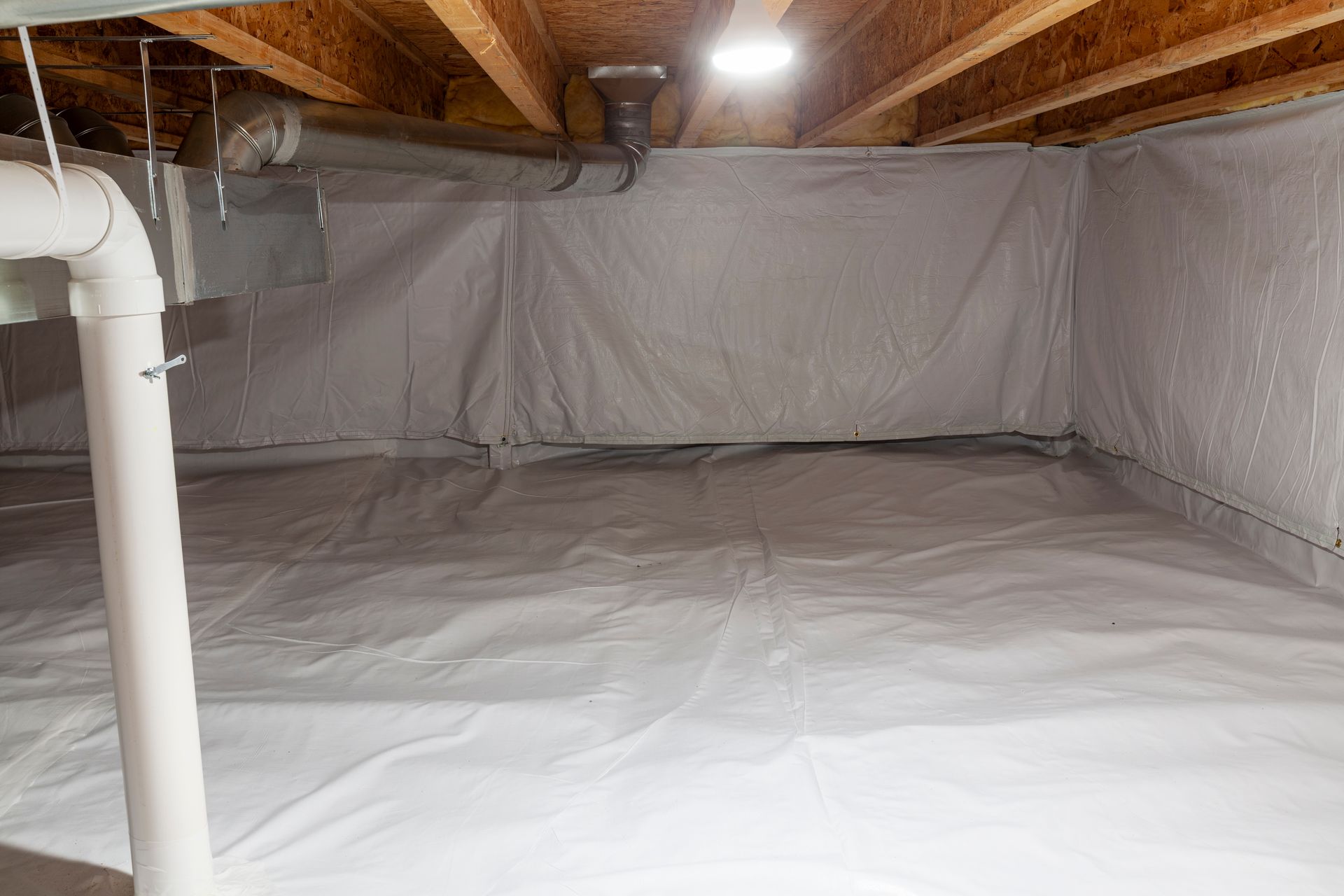
A radon mitigation system works by creating negative pressure beneath your home's foundation or in the crawl space, drawing radon gas from the soil and venting it safely above the roofline before it can enter your living space. The system typically includes a vent pipe routed from beneath the foundation or crawl space up through the house or along an exterior wall, and a continuously running fan that maintains consistent suction. It's a passive, low-maintenance system once installed — most homeowners barely notice it's there beyond a small increase in electricity use and an occasional check of the system's pressure gauge.
Testing Comes First
We don't recommend mitigation systems to homes that don't need them. Every project starts with radon testing to establish your home's actual level, since mitigation is only necessary — and only something we'll recommend — when results come back above the EPA's action level of 4 pCi/L. If your home tests below that level, we'll tell you so, along with guidance on periodic retesting given regional risk.
Why Homeowners Choose North Georgia Crawlspace Company
- Locally owned and operated, with deep familiarity with North Georgia's elevated radon-risk geology
- Testing-first approach — we don't sell mitigation systems homes don't need
- Systems designed for your specific foundation type, including crawl space-specific approaches
- Post-installation testing included, so you have documented confirmation the system is working
Frequently Asked Questions
How do I know if my home has a radon problem?
The only way to know is to test. Given North Georgia's mountain counties have some of the highest radon potential in the state, we recommend testing regardless of whether you have any specific concern.
How much does a radon mitigation system cost?
Cost depends on your home's foundation type and the mitigation approach needed. We provide a detailed, itemized quote after testing confirms mitigation is necessary.
How long does mitigation system installation take?
Most residential radon mitigation systems are installed in a single day.
Will a mitigation system work permanently, or does it need maintenance?
A properly installed system is designed for long-term, low-maintenance operation, though the fan and system should be periodically checked to confirm it's still functioning, similar to a smoke detector.