
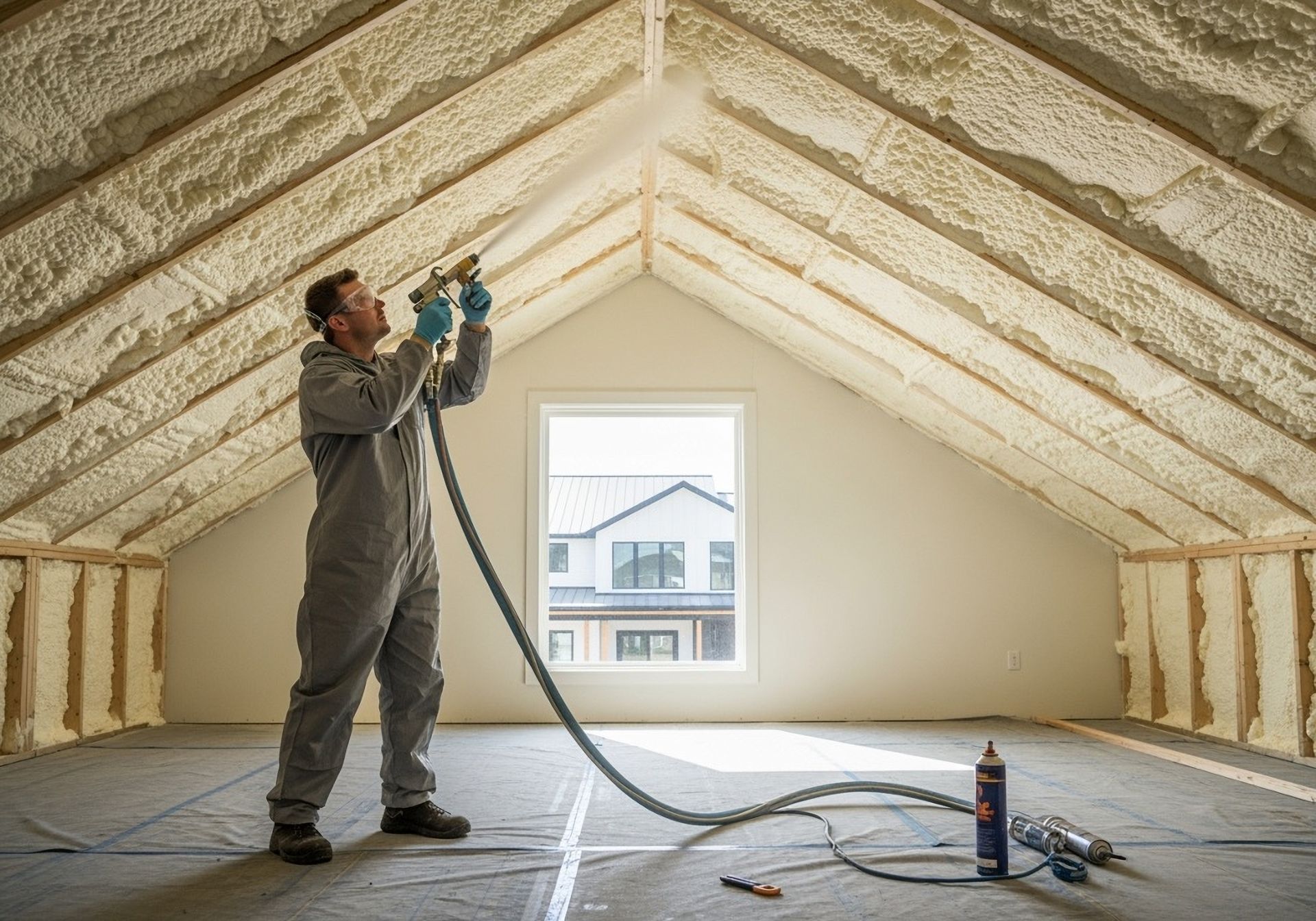
Open-Cell Spray Foam: Effective Air Sealing for Attics and Above-Grade Spaces
Not every insulation job calls for the density and cost of closed-cell foam. In attics and above-grade walls — areas without the moisture exposure of a crawl space — open-cell spray foam delivers strong air sealing and solid insulating performance at a lower cost, with the added benefit of noticeably better sound dampening than most other insulation types.
Get in touch today
What Open-Cell Foam Is Good At
Open-cell spray foam expands significantly during application, filling cavities and irregular spaces thoroughly and sealing air leaks as it cures. Its softer, more flexible structure allows some vapor permeability, which can actually be beneficial in above-grade wall assemblies that need to dry outward, and its lower density makes it a more budget-friendly option for larger areas like attics. It's also notably effective at reducing airborne sound transmission, a common reason homeowners choose it for interior walls near bedrooms or media rooms.
Best Applications for Open-Cell Foam
- Attic spaces, where its expansion fills irregular framing cavities effectively
- Above-grade exterior walls in dry, properly ventilated construction
- Interior walls where sound dampening is a priority
- Roof deck insulation in conditioned attic applications
- Larger-volume areas where cost-effective coverage matters
Why We Don't Recommend It for Crawl Spaces
Open-cell foam's greater vapor permeability and lower resistance to water absorption make it a poor match for crawl space walls, where humidity and occasional moisture exposure are common even in well-maintained spaces. For crawl space applications, we recommend closed-cell spray foam or rigid foam board instead, both of which handle moisture far better. We'll always recommend the material suited to where it's actually going, not the cheapest option across the board.
Our Installation Process
After a free inspection to confirm open-cell foam is the right fit for your project, we apply the foam directly to the target surface — attic roof deck, wall cavities, or interior partitions — where it expands to fill the space and cures into a seamless, air-sealing layer. We take care to protect surrounding areas during application and clean up thoroughly once the job is complete.
Frequently Asked Questions
Is open-cell spray foam cheaper than closed-cell?
Yes, generally — open-cell foam typically costs less per square foot than closed-cell, which is part of why it's a popular choice for larger areas like full attics where closed-cell's higher cost is harder to justify.
Can open-cell foam be used in a crawl space?
We generally don't recommend it for crawl space walls due to moisture exposure concerns; closed-cell foam or rigid foam board are better suited to that application.
Does open-cell foam help with noise reduction?
Yes, its structure is notably effective at reducing airborne sound transmission, which makes it a popular choice for interior walls even outside of pure energy-efficiency projects.