
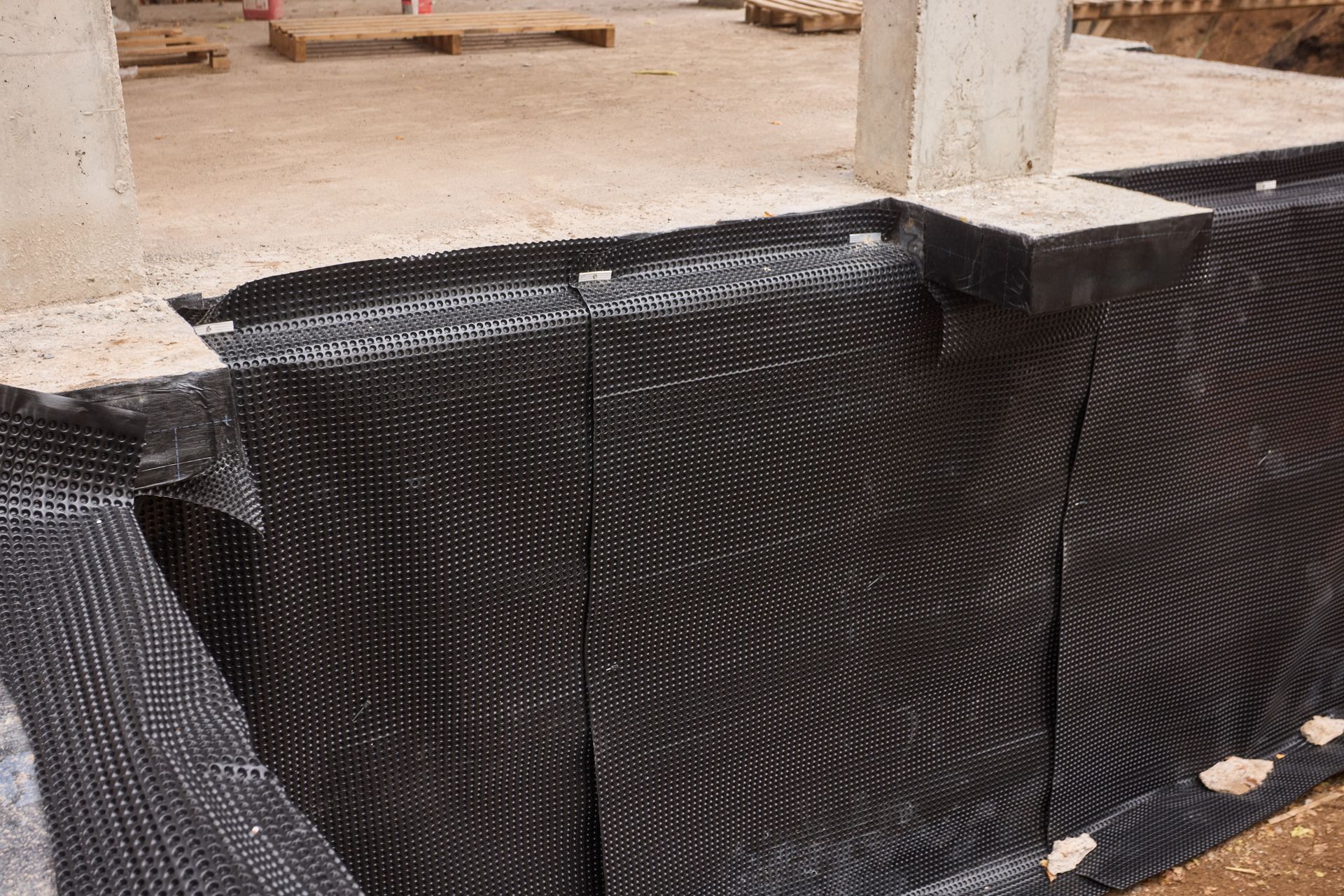
Foundation Wall Waterproofing: Sealing the Water Out at the Wall Itself
If your basement walls show cracks, damp patches, or that chalky white residue called efflorescence, water isn't just nearby — it's actively passing through the wall material itself, driven by the constant hydrostatic pressure of the soil outside. Foundation wall waterproofing addresses that entry point directly, rather than only managing the water once it's already inside.
Get in touch today
Understanding Hydrostatic Pressure
Unlike a crawl space that's often only partially below grade, basement walls are typically in full contact with surrounding soil on some or all sides. After rain, that soil holds groundwater against your foundation walls under constant pressure, which pushes water through cracks, porous concrete block, and deteriorated mortar joints — even without a large, obvious opening. This is why basement wall issues tend to get worse after heavy or sustained rain, and why sealing has to be able to withstand ongoing pressure, not just resist an occasional splash.
What Wall Waterproofing Involves
- Sealing active cracks with materials designed to handle hydrostatic pressure, not just surface patching
- Treating porous block or concrete surfaces with waterproof coatings where seepage is occurring across the wall material itself
- Repointing deteriorated mortar joints in block foundation walls
- Assessing and addressing bowing or leaning walls, which may need structural reinforcement alongside waterproofing
- Coordinating with interior drainage where wall treatment alone isn't sufficient to manage the water volume
Addressing Bowing Walls
A wall that's visibly bowing or leaning inward is a structural concern in addition to a water concern — usually the result of sustained soil pressure over time. We assess wall condition carefully during inspection, and if reinforcement (such as wall anchors or bracing) is needed to stop further movement, we address that alongside waterproofing rather than treating water intrusion while leaving a structural problem unresolved.
Frequently Asked Questions
Is efflorescence on my basement wall a serious problem?
Efflorescence itself is a mineral deposit left behind as water evaporates from the wall surface — not dangerous on its own, but a clear sign that water is passing through the wall material, which is worth addressing before it worsens.
Can a basement wall crack be repaired without excavating outside?
Yes, in most cases — interior crack sealing and wall treatment can address the majority of basement wall water issues without exterior excavation.
How do I know if my bowing wall needs structural repair, not just waterproofing?
Any visible inward bowing or leaning warrants a professional structural assessment in addition to waterproofing evaluation, which we provide as part of your free inspection.