
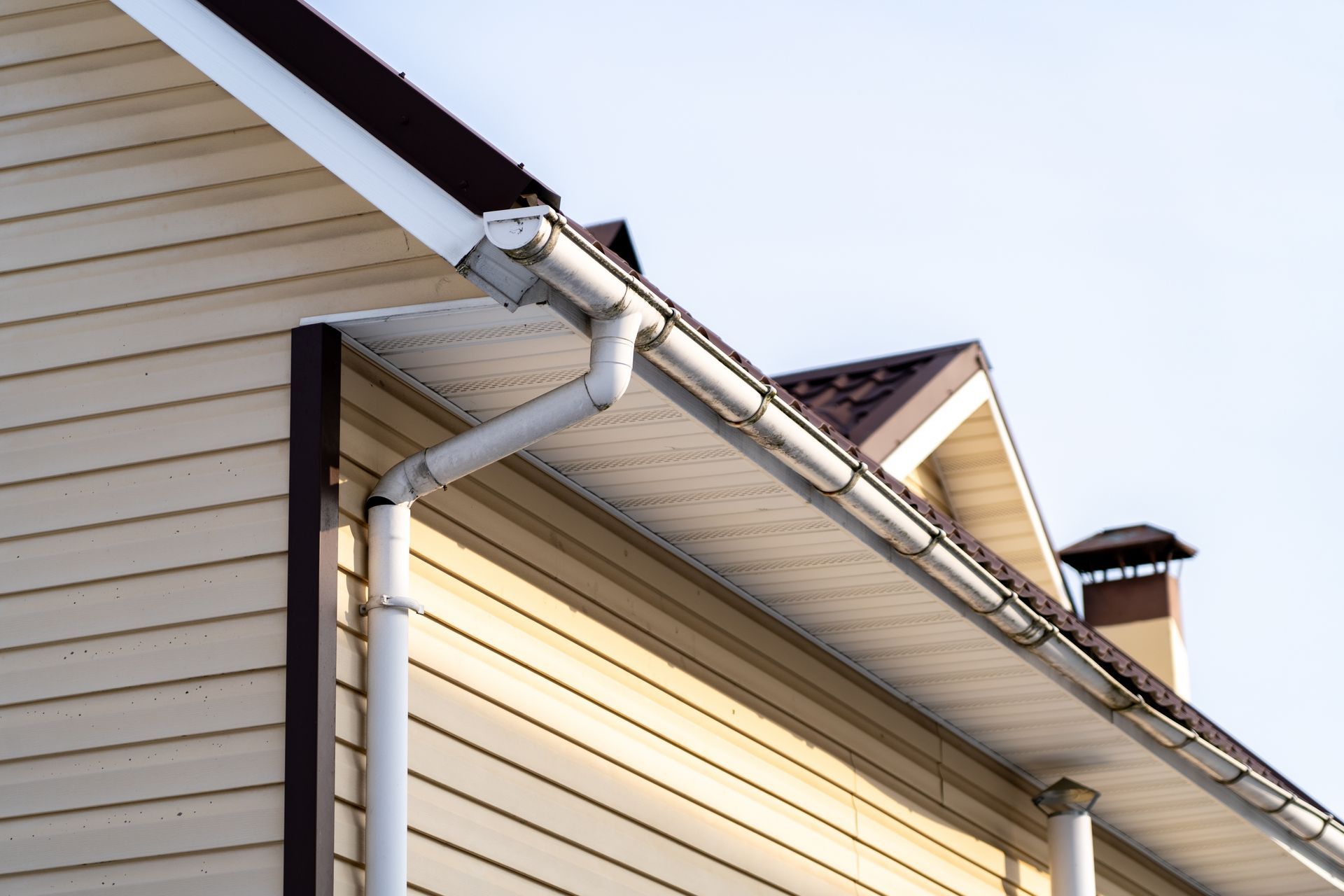
Downspout Drainage: Getting Roof Water Away From Your Foundation
Your roof collects an enormous amount of water during a storm — and if your gutters funnel all of it out through downspouts that just dump onto the ground a foot or two from your foundation, you've built a very efficient system for saturating the soil right next to your house every time it rains. It's one of the most common contributors to crawl space and foundation moisture problems we find, and often one of the simplest to fix.
Get in touch today
Why This Matters More Than It Seems
A typical roof can shed thousands of gallons of water during a single heavy rain event. If that water isn't carried well away from the foundation, it saturates the soil right where you least want it — exactly where it can seep into a crawl space or basement, or contribute to the soil movement that drives foundation settlement. Fixing downspout drainage doesn't stop rain from falling, but it stops your own roof from actively working against your foundation.
Solid Pipe vs. Flexible Extensions
A lot of homes have a short, flexible black corrugated extension attached to the downspout — better than nothing, but prone to kinking, crushing, and disconnecting over time, which often leaves water discharging right back at the foundation without anyone noticing. We install solid, rigid underground pipe instead, buried and routed to a proper discharge point well away from your home. Solid pipe doesn't collapse under soil weight or lawn equipment, and because it's buried, it doesn't create a trip hazard or an eyesore across your yard.
Signs Your Downspout Drainage Needs Attention
A downspout that discharges within a few feet of your foundation
Visible erosion or a muddy channel where a downspout empties
A flexible extension that's kinked, crushed, or disconnected
Crawl space moisture concentrated near a specific exterior wall below a downspout
Water pooling near the foundation specifically during and right after rain
Our Installation Process
We connect solid pipe directly to your existing downspouts, route it underground away from the foundation, and discharge it at a point where it won't create a new problem — a storm drain, a low area away from structures, or tied into a broader yard drainage system where one exists. Where multiple downspouts are contributing to the same problem area, we can combine them into a single routed system rather than fixing them one at a time.
Frequently Asked Questions
How far should downspout water be discharged from the house?
General best practice is at least 6-10 feet away from the foundation, though the ideal distance depends on your yard's grading and where water naturally wants to flow from there. We plan routing during your inspection.
Can downspout drainage be tied into a larger yard drainage system?
Yes — where a broader drainage system is being installed, we commonly route downspouts directly into it, so roof water is managed as part of the same overall plan instead of separately.
Is this a quick fix or a bigger project?
For most homes, downspout drainage correction is a relatively fast, affordable project — often completed in a single day — with a noticeable impact on the moisture reaching your foundation.