
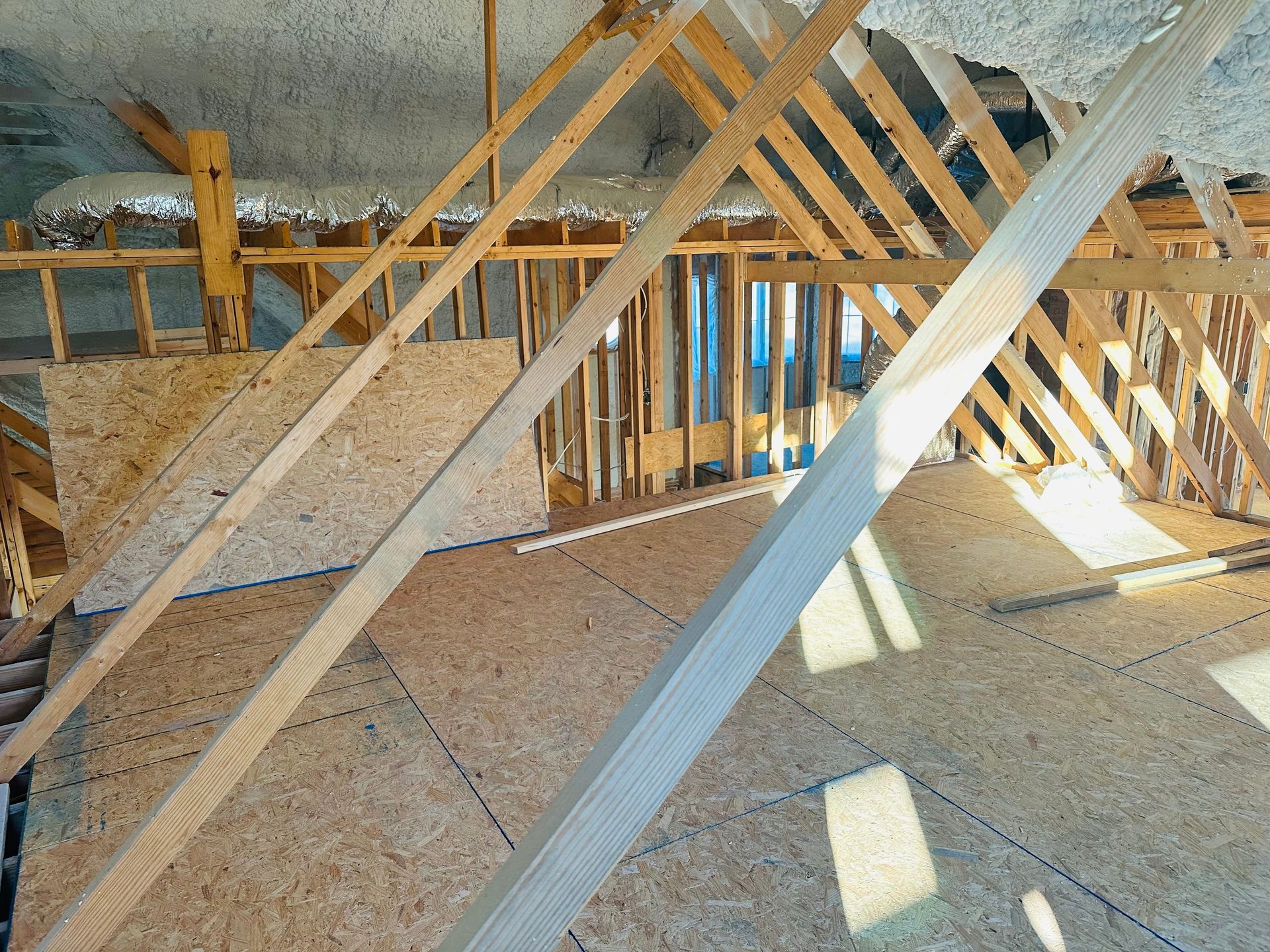
Closed-Cell Spray Foam: Insulation That Doesn't Fall Apart in a Damp Crawl Space
If you've pulled back sagging fiberglass insulation in a crawl space and found it damp, matted, or growing mold, you've seen firsthand why that material struggles in our region's humid, moisture-prone crawl spaces. Closed-cell spray foam solves that problem at the source — it's dense, moisture-resistant, and doesn't absorb water the way traditional batt insulation does.
Get in touch today
What Makes Closed-Cell Foam Different
Closed-cell spray foam is applied as a liquid that expands and cures into a dense, rigid material with tightly packed cells that don't allow air or moisture to pass through easily. That density gives it a higher R-value per inch than most other insulation types, meaning it insulates more effectively in less material thickness. It also acts as its own air barrier and largely as its own vapor barrier, sealing gaps and cracks as it expands rather than just filling a cavity like batt insulation does.
Best Applications for Closed-Cell Foam
- Crawl space foundation walls, especially in encapsulated or semi-conditioned spaces
- Rim joists, one of the biggest sources of air and energy leakage in a home
- Areas with any history of moisture exposure or humidity concerns
- Below-grade or partially below-grade walls where water resistance matters most
- Spaces where added structural rigidity from the rigid, dense foam is a benefit
Closed-Cell vs. Open-Cell: Why the Choice Matters Here
Open-cell spray foam is lighter, more affordable, and vapor-permeable — good qualities for above-grade walls and attics, but not ideal in a crawl space where moisture resistance is the priority. Closed-cell foam's density and resistance to water absorption make it the stronger choice for crawl space walls and any application where the material may be exposed to humidity or occasional dampness. We'll recommend the right type for each area of your home rather than using one product everywhere.
Our Installation Process
We start with a free inspection to confirm closed-cell foam is the right choice for your application and to address any existing moisture issues first, since insulating over an active water problem isn't a lasting fix. Installation involves spraying the foam directly onto crawl space walls, rim joists, or other target surfaces, where it expands and cures in place, sealing gaps and providing continuous insulation without seams.
Frequently Asked Questions
Is closed-cell spray foam worth the higher cost compared to fiberglass?
In moisture-prone areas like crawl space walls, yes — fiberglass that gets wet loses much of its insulating value and often needs replacing, while closed-cell foam is designed to perform in exactly those conditions and typically lasts far longer without degrading.
Does closed-cell foam replace the need for a vapor barrier?
It significantly reduces moisture movement through the treated surface, but a full vapor barrier on the crawl space floor is still typically recommended to address ground moisture, which spray foam on the walls doesn't cover.
How long does closed-cell spray foam last?
Properly installed closed-cell foam is a long-lasting material that generally doesn't sag, settle, or degrade the way fiberglass can, often performing well for the life of the home with no replacement needed.